

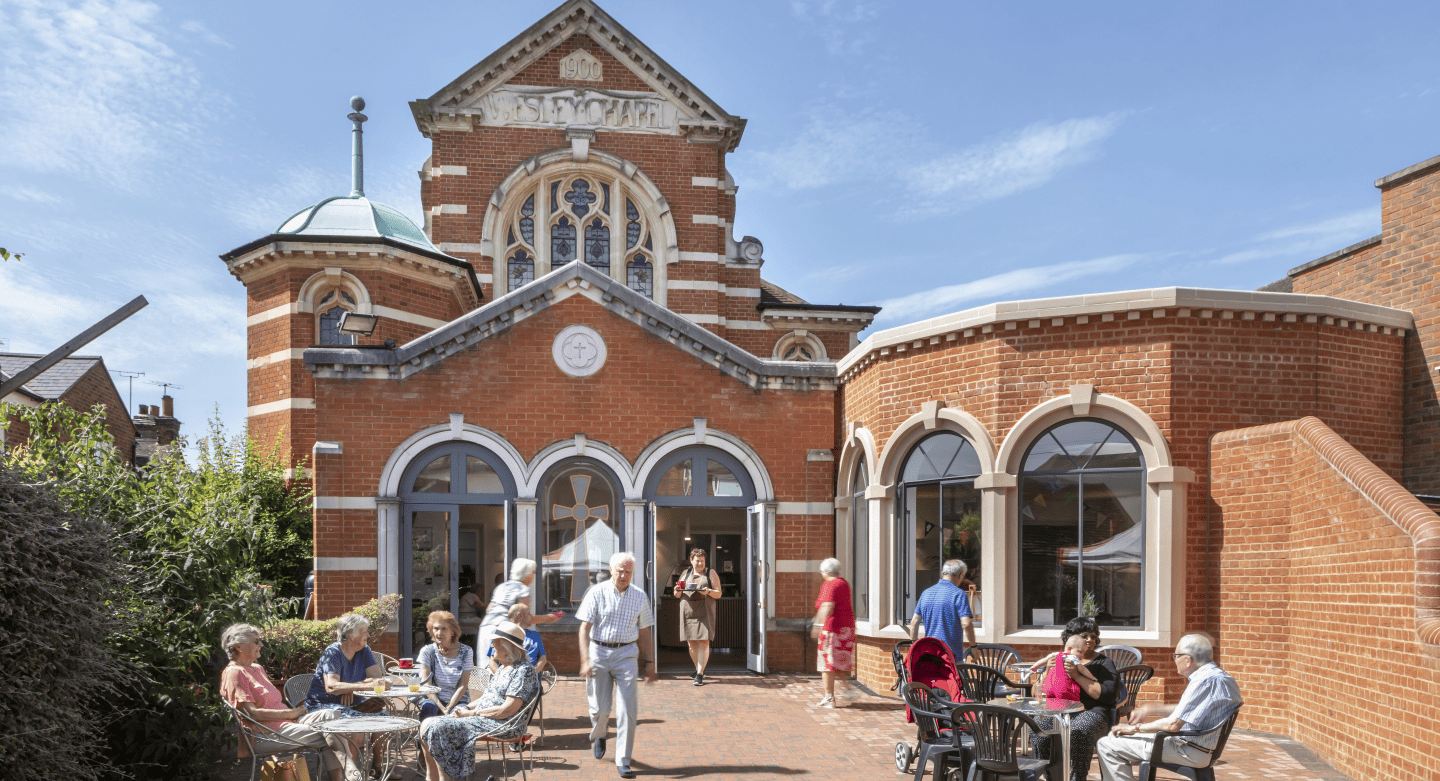
Churches
Designing church buildings to facilitate mission, transform communities and share the gospel
Whether you’ve inherited a listed Victorian building or acquired a redundant plot for development (or something in-between), we understand how important it is to manage your church’s architectural assets wisely. Perhaps you’re planning a once-in-a-generation project; maybe you’re simply hoping for a little more storage or improved accessibility.
Whatever situation prompts the search for an architect, church projects present unique challenges. As well as carefully preserving heritage, church buildings must support the ongoing life of the current congregation, and also look outward to become places of connection for the local area. At Leap Architects we have a well-established process to navigate the design stage together: engaging people along the way, inviting useful feedback, and responding creatively to your church’s long-term vision.
Frequently Asked Questions
Faith and obedience is what’s needed, not money. At least at the outset.
It is quite usual for a church to approach us with little financial resource but with big vision for a big building project of some kind. We’re entirely comfortable with that and are happy to partner with churches to begin articulating the vision. Most church projects will involve a considerable amount of fundraising and early vision-casting is crucial to engage people and gauge support for the project.
We have a well established process for all-important early stages of a project to explore the aspiration or need for a building and capture and articulate a vision of what it could look like. This is the start of the fund-raising journey.
Designing by committee won’t work but engaging the whole church family in the process is essential. Communication and good management of expectations is vital to the success of the project and this starts on day 1and continues throughout the whole project.
We have a well-established process for engaging the whole church in the design process, both leaders and church congregation or members. We recommend that our main contact through the design iteration process is with a representative group of no more than 6 or 8 people – these need not be your leadership team though leadership involvement is of course essential, but could be a mix of people who have a good understanding of the vision of the church and might have involvement in different areas of church life.
Don’t just include the encouragers and visionaries in this group – it can be helpful to have input from the details people and those who may be resistant to change. All opinions are helpful opinions.
Our partnership with the church includes engaging church members and taking opportunities to share emerging designs to listen to feedback and observations to help shape and hone the design proposals whilst also measuring faith for the size and scope of the project and the financial expectations.
It’s true that some projects face challenges that build character, test patience and require tenacity. That’s not a reason to step out in obedient faith. The Bible is full of examples of people seeing God’s promises fulfilled in his perfect timing which don’t always align with our desires.
That said, not every church project takes decades. Each project finds its own pace and this will depend on innumerable factors from the make up of the church, leadership style, church governance to outside factors such as planning or denominational permissions processes, fund-raising progress or neighbourly relations.
There isn’t a predicted or average timescale we can quote but most reasonable sized projects will take at least 3 years to begin work on site. Our recommendation is that progress is measured by milestones. Taking on a building project can feel daunting but by taking a step by step approach and bringing in the right experts at the right time, the project will come to fruition and, done well, will have lasting impact that hugely outweighs any challenges through the journey.
Good stewardship of our built heritage necessarily involves sensitive adaptation to provide for the ongoing, ever-changing needs of our communities. When buildings are no longer providing accommodation or resources that are practical or comfortable the usefulness and attraction diminishes, so too does the impetus and financial wherewithal to preserve the fabric.
Sustainability begins with ensuring our buildings continue to serve a meaningful purpose. Throughout civilisation, buildings have been continually adapted to respond to local need, systemic, technological and societal change. This is an ongoing imperitive to leave the legacy we have inherited in a strong position to continue to serve future generations.
Conservation is important but we can celebrate the past whilst meeting the needs of our time and preparing for the future. There are challenges associated with proposing adaptation to protected buildings and it may not be for the feint-hearted but, we suggest this responsibility goes with the territory of leading a church and stewarding the resources available to us. The building is a resource for the mission of the church and should never be our primary focus but it is an asset, a talent that should be wisely invested for the future.
A church building project is a wonderful opportunity to forge links and build relationships with neighbours and the wider community. Early engagement of the church family is important as is early engagement with the church’s neighbours.
The build project offers opportunity to ask neighbours how the church can serve their needs. Done well, community engagement can bring surprising revelation and dramatically change a church building design brief.
Planning applications benefit from community consultation as can fund-raising campaigns, opening channels of funding that aren’t just for faith organisations. Whilst not mandatory, we recommend good community consultation and have developed Neighbours, a community engagement programme for churches to help better understand the social needs and place the church in a strong position to respond positively.
No previous experience needed; we will partner with you, bring in the right people and expertise at the right time, communicating the process and navigating you through the process step by step.
Our desire is to make the process as easy and straightforward as possible. We want you to continue to be church and, whilst we recognise that a building project can be a wonderfully faith-building journey for a church, we still want you to be able to continue to be church together without the project becoming an unwelcome distraction or undue burden.
The cost of building has always been a challenge and perhaps never so much as now but this isn’t a reason to hold back, in fact, probably quite the opposite as there’s never as good a time as the present!
If the vision is right, the money will follow. We’ve quoted this many times to many churches and seen the outworking of it time and again. It can be easier to fund-raise for a larger, exciting project that captures peoples’ imaginations than it can be to raise money for smaller, lack lustre schemes.
We’ll take on any size project but often caution churches against focussing on a discrete project without first considering the big picture. In our experience we have seen far too many churches that have suffered from ‘ad-hocism’ building design – a well-intentioned adaptation or extension to the building that meets an immediate need but inadvertently leads to an awkward, unsatisfactory layout over the course of time.
We wholeheartedly recommend that churches considering a project to meet a particular need take a step back and ask us to prepare a strategic design appraisal of the whole building. This isn’t because we’re trying to get more work, it’s because we want to safeguard the church from making decisions that could prove to be short-sighted, hindering future development.
A well-considered strategy plan or masterplan can help churches implement work in a responsible way over many years and ensure that money is spent on the building wisely, reducing the potential for work to be undone or sacrificed later.
Jesus was clear in his teaching that we need to love our neighbour and take care of the poor and on the day of Pentecost, the apostles didn’t rush out to the architects and builders to design buildings to accommodate the thousands that were suddenly added to their number. We agree with the sentiment of this question and yet God has provided immense building resource to the church across the UK and appointed us to help churches release the potential of their buildings to help fulfil the great commission to make disciples of all peoples.
The parable of the talents encourages us to responsibly steward our resources, this could be applied to our God given abilities and giftings but also to our material wealth and belongings as well as our time and energy. There are countless churches without buildings but every church meets in some kind of accommodation. It is indisputable that our church buildings can be an incredible and invaluable resource in serving our neighbours, preaching the gospel and making disciples.
Our response to the need to steward our built resources and invest in their upkeep and future development requires faith and obedience. Churches and individuals should be helping the poor and our buildings can become a vital part of that in the ministries that they can host and the support structures they facilitate.
Church buildings and church owned land can become a resource that generates financial income for the church. Taking this approach could see a return on investment that greatly outweighs the cost of the project. Our Family Silver services help churches steward real estate resource in such a way that they create spaces that sustain life whilst also generating perpetual income for mission.


A practical solution for fixed pews in historic churches
Too many churches are unable to use their spaces fully due to fixed or heavy furniture – but that doesn’t mean you have to choose between enduring restrictions or removing everything completely. PewGo enables you to retain your heritage furniture but move it quickly and easily, adding flexibility to open up spaces and possibilities within your building.

A comprehensive survey tool to get to know your community
Have you ever asked the people around you what your church could do for them? Neighbours is a holistic assessment of the needs, hopes and experiences of your local community, providing robust data and perceptive insights to guide your future planning. Churches have used the results to initiate new missions, develop briefs for building projects or secure grant funding, as well as gaining a deeper understanding of the people they live and work alongside.
Considering a possible building project or looking to get started? We’d love to talk about your church’s vision and heart for your community.